
My Faith Journey
My First 20 Years
My first 20 years were fairly typical for a pastor’s kid in Ky. Church life was all-encompassing, with some kind of activity every day.
As the preacher’s boy, you’ve really 2 choices. Push back against the expectations you’ve been born with, or embrace them. I chose the latter option. By age 10, I already knew I wanted to be a preacher, and I preached my first sermon at age 12. It could more accurately be described as a book report of Leonard Ravenhill’s book, The Power of Prayer. Those poor people endured 45 minutes of this 12-year-old know-it-all telling them why and how they should pray. Bless those people.
I continued to preach and teach throughout my teenage years, finding my most comfortable place as a leader among my own peer group. Nothing like a teenager telling other teenagers how to live. Yeah, it was monstrous.
But I can say this for myself, I was sincere. I believed the message of Christianity with every fiber of my being. I’d spend late nights working through Perry Stone’s camp meeting sessions. My Bible was my manual and I was learning it from cover to cover. I was genuinely interested in it.
By graduation, I was determined to change the world, and all charismatic world changers in those days made pilgrimage to one of the big guys–Oral Roberts, Kenneth Hagin, Kenneth Copeland, Lester Sumrall, etc.
I chose to seek mentorship from Rod Parsley, so off I went to World Harvest Bible College, pursuing a Pastoral Studies degree. It was a whirlwind season full of study, work, community outreach, huge revival meetings and exhaustion.
It was a relief to settle into Tucson ministry life in the late 90s. My uncle was now my pastor, and he was collaborative in nature. We were involved in cross-denominational church activities and fellowships. The exposure to other church groups, Catholics to Pentecostals, was both frightening and exciting. We (ALL of us) were the Church. My uncle believed it, and he lived it.


My Faith Crisis
My next 20 years are a blur. Marriage, two kids, a career, and ministry all precariously balanced with personal health struggles and painful betrayals.
But this was the season that I learned the most about the Bible. In my early 20s, I was exposed to one of those luminaries who demonstrated the power of being a lifelong learner. I already had an insatiable curiosity, but he gave me a framework of church history to satisfy that researcher’s itch in me. I studied the great reformers and the early British & American Revivalists who established so many of our church institutions.
I eventually became involved in a church movement known as Messianic Judaism. It’s the recognition that Jesus and his apostles were Jewish men in a Jewish culture with a Jewish message. Instead of reading the Bible as a departure from 1st century Judaism, we saw it as an insider’s reformation of Judaism. Jesus’ message could be seen as call to a heartfelt Jewish faith, and his ire for the Pharisees should be seen as a rejection of mere outward piety, not as a judgment on Judaism itself.
Lessons from the Learned
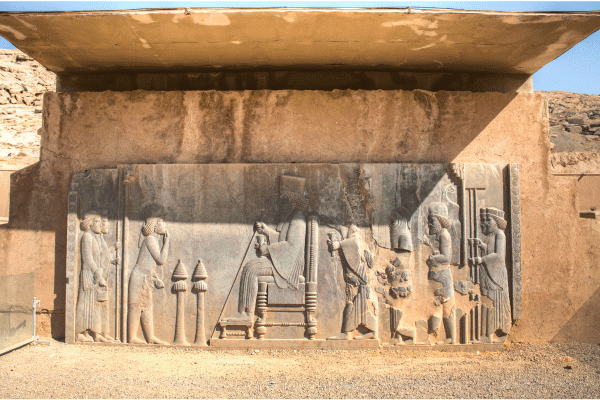
I soon turned that researcher’s talent toward the study of the Ancient Near East, the context of the Biblical writers themselves. I regularly listened to conference presentations from the Society for Biblical Literature and the Evangelical Theological Society. Sounds riveting, right? But for me, it was. I was infatuated by the leading scholars in the fields of Biblical archeology, anthropology, and textual criticism. I nerded out over the Biblical languages and cultural influences on the ancient Israelites.
One of the most powerful lessons I learned was the scholar’s imperative to find and study the primary sources. Instead of only reading commentators on a piece of literature, the lesson said, “read the piece of literature first!” Start there, and then move on to the commentators. Scholars became familiar with the literature and then studied the cultural and historical background of the writer/audience. Doing this caused the literature to speak more profoundly.
I had spent my life studying the Biblical literature itself, so I dove into the cultural and historical background of the ancient Near East, where the writers of the Bible lived. What was life like not only for the ancient Israelites, but also for the Sumerians, Babylonians, Egyptians and Canaanites. What were their beliefs? What did they think about the gods and man’s duty to them? And how would the message of the Hebrews fall on those ears?
It didn’t take long before I was confronted with the fact that many elements of the Bible were not original Biblical ideas. I read passages in the sacred literatures of these surrounding nations that contained earlier stories and characters that were later written into the Biblical books themselves. At first, this baffled me since I was raised believing that the Bible was the inerrant revelation of God Himself. Was God plagiarizing the surrounding cultures?
That uneasy thought was compounded by the realization that the Bible had a worldview that I considered erroneous to modern sensibilities. The Bible puts forth a flat-earth cosmology. The four corners of the earth are balanced on the pillars of the deep, and the windows of heaven open and pour out blessings (rain) on the inhabitants below. This was the language of the Near East.
Back To School
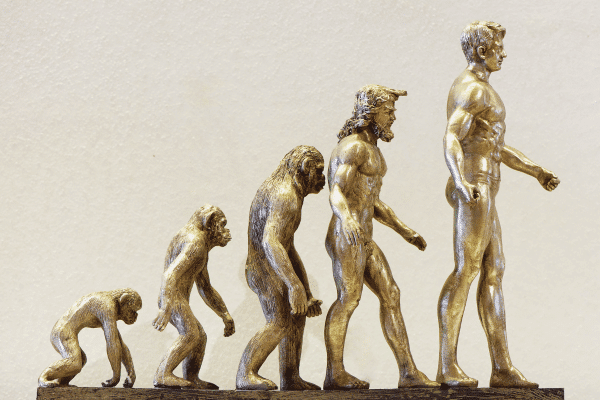
But Biblical scholarship wasn’t the only area that my busy mind was consumed with. I absolutely love science. In high school, I would read popular science books about theoretical physics and biology. In fact, I’ve yet to find a field of science that I’m not curious about. However, I was raised in the backward Southern Bible belt where the field of evolution suffered disdain. Darwin was seen as the Devil’s messenger and evolution was a farce. I’ve been to multiple conferences that sought to undermine this mainstream scientific theory with “proofs”, most of which were designed to support the young earth idea of a 6000 year old universe.
I had decided as the pastor of a local messianic church that I was going to tackle this tough issue. I had already had my doubts about the young-earth idea. That wasn’t a problem with my Biblical worldview. There’s ways to understand the early chapters in Genesis that don’t require a young earth. But when it came to humanity, our history definitely started a few millennia ago, not hundreds of them. I didn’t want to be guilty of reading straw man arguments about evolution, I wanted to hear from evolutionists themselves. Primary sources, right? So I picked up a textbook on evolution and read it cover to cover. I still remember the day I turned the last page and just sit at my table soaking it all in.
How was it possible that I’d never been exposed to this overwhelming evidence before? Seriously, the school systems of Kentucky back in the 80s & 90s weren’t as progressive as they are today. I remember my 7th grade science teacher spending two days on the “theory of evolution”, emphasis on theory. He was required, he said, to give adequate time to this doctrine but we all knew it was wrong. The Bible told us so!
Sitting at that table, thoughts began to coalesce in my mind. If evolution is real (and I was thoroughly convinced on the evidence I’d just been exposed to), then the universe is truly old. And the idea that we were created in God’s image was suddenly nonsensical. At what point of our evolutionary past did we resemble God? Did God use evolution to create us? Did He guide its progress to form mankind the way we came to be?
One thing was for sure. If there was a God, the Biblical understanding that I had didn’t recognize Him. And that left open a very uncomfortable question–Is there a god?
My next few years are best described as adrift. The realizations of the Biblical origins combined with the facts of evolution tore the fabric of my evangelical faith to shreds. I dove into the works of famous atheists like Richard Dawkins, Sam Harris, Daniel Dennett, Christopher Hitchens, and others. I examined every belief I had and asked, “why do I believe this?” My forays in science became renewed explorations of the fields of geology, evolutionary biology, and astrophysics. I was a sponge soaking up education I’d been starved of.
Eventually, the sediment of my mind settled, and once again I learned to be quiet. I didn’t know if there was a god or not. If there was, I made no claims on the nature of that divinity. It became okay not to know. To ask the questions and seek with curiosity was enough.
Crisis Averted
I still make no claims about the nature of divinity. I definitely don’t believe in the anthropomorphic gods of the Bible and the Near East. If there is a divinity, maybe its a force or a universal consciousness. The exploration of these questions is what this site is about.
I’m not here as the Guru presenting my teachings to you. I’m here as a learner, exploring ideas and concepts that are both ancient and modern. Persistent questions that have intrigued humanity for millennia. I hope that you’ll join me on this journey and ask the questions of yourself.